
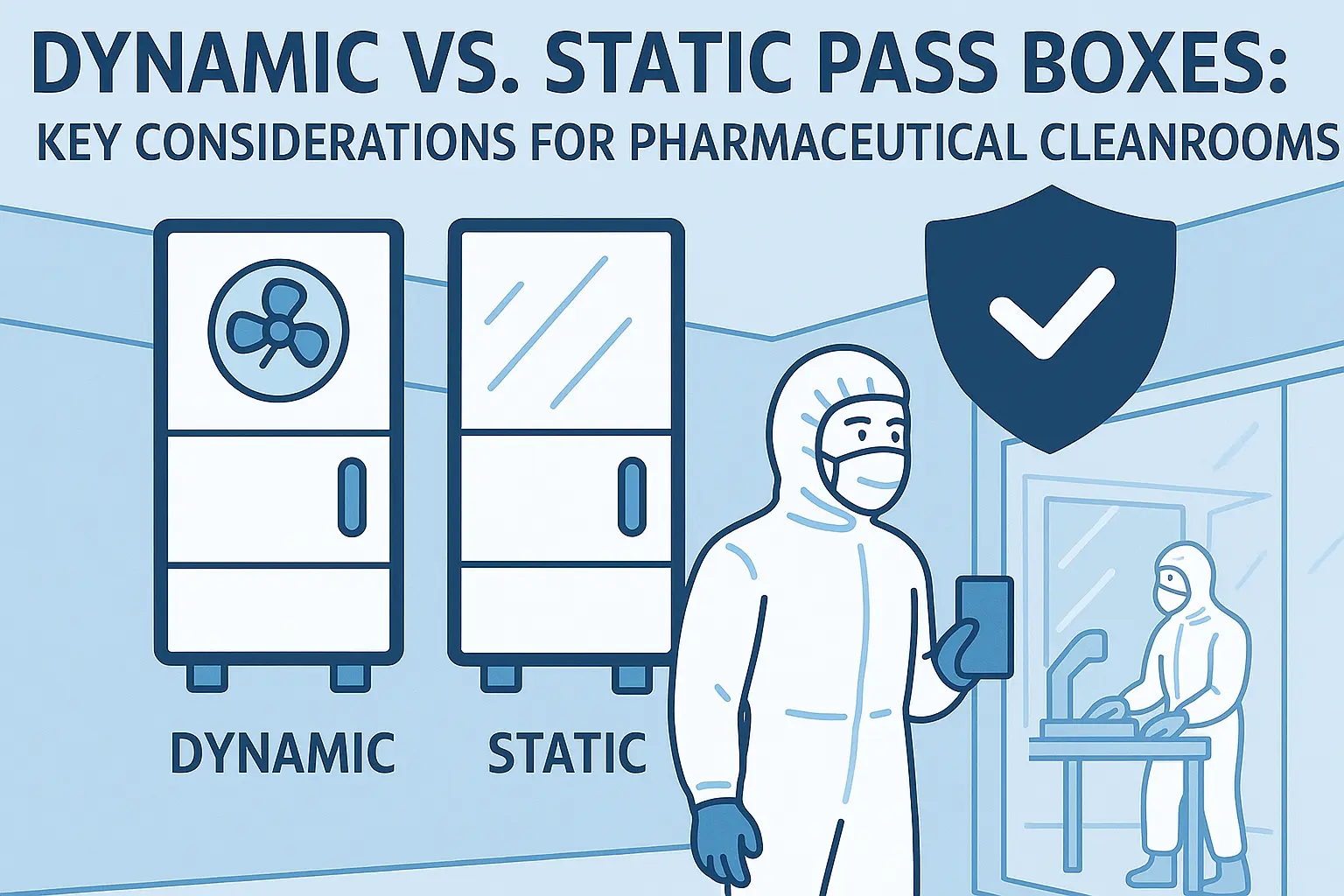
Static vs. Dynamic Pass Boxes: A Comparative Guide for Pharmaceutical Cleanrooms
Pass box systems (also called transfer hatches or pass-through chambers) are essential components in pharmaceutical cleanroom facilities, enabling the controlled transfer of materials between spaces of different classifications while maintaining contamination control. When selecting a pass box solution, one of the fundamental decisions is whether to implement a static or dynamic system.
Static Pass Box Systems: Overview
Static pass boxes are passive transfer chambers that rely primarily on physical barriers and interlocking door mechanisms to maintain separation between spaces. These systems do not incorporate active air handling components.
Key Characteristics of Static Pass Boxes
- •Mechanical Design: Simple construction with interlocking doors that prevent simultaneous opening
- •Contamination Control: Relies on passive containment without active air filtration
- •Energy Requirements: Minimal or no power requirements beyond door interlocking systems
- •Maintenance Needs: Low maintenance with few moving parts or components requiring regular service
- •Cost Considerations: Generally lower capital and operational costs
Ideal Applications for Static Systems
Static pass boxes are most suitable for:
- •Transfers between areas with similar or adjacent classification levels
- •Situations where the primary concern is maintaining physical separation
- •Facilities with budget constraints or limited utility infrastructure
- •Applications with lower contamination control requirements
Dynamic Pass Box Systems: Overview
Dynamic pass boxes incorporate active air handling components such as HEPA filtration and dedicated air supply systems to provide enhanced contamination control during material transfers.
Key Characteristics of Dynamic Pass Boxes
- •Active Filtration: Incorporate HEPA or ULPA filters to remove particulates from the pass box environment
- •Airflow Patterns: May feature unidirectional (laminar) or turbulent airflow systems
- •Control Systems: Often include electronic controls, monitoring, and alarm features
- •Energy Requirements: Higher energy consumption due to air handling components
- •Maintenance Needs: Require regular filter integrity testing and system maintenance
- •Cost Considerations: Higher initial capital costs and ongoing operational expenses
Ideal Applications for Dynamic Systems
Dynamic pass boxes are most appropriate for:
- •Transfers between areas with significantly different classification levels
- •Critical applications where enhanced contamination control is required
- •Facilities handling highly sensitive products or materials
- •Situations requiring documented air quality within the transfer chamber
Comparative Analysis
Contamination Control Effectiveness
Dynamic systems offer superior contamination control through active air filtration and consistent airflow, while static systems provide basic physical separation without actively removing airborne contaminants.
Total Cost of Ownership
Static systems have lower initial and ongoing costs but may be less effective for critical applications. Dynamic systems require higher investment but deliver enhanced performance for sensitive applications.
Regulatory Considerations
For highly regulated processes, dynamic systems typically offer better documentation capabilities and more robust contamination control, potentially simplifying compliance with stringent requirements.
Selection Framework
When determining whether a static or dynamic pass box is appropriate for your application, consider:
- •Risk Assessment: Evaluate the contamination sensitivity of materials being transferred and the potential impact of contamination events.
- •Classification Differential: Consider the difference in classification levels between connected spaces, with greater differences generally warranting dynamic systems.
- •Transfer Volume and Frequency: Higher transfer volumes or frequencies may justify the investment in dynamic systems to maintain consistent contamination control.
- •Regulatory Requirements: Review applicable regulations and guidance to determine minimum requirements for your specific application.
Conclusion
Both static and dynamic pass box systems have important roles in pharmaceutical cleanroom facilities. By carefully assessing your specific requirements, risk factors, and operational constraints, you can select the solution that provides the optimal balance of contamination control, cost-effectiveness, and regulatory compliance.
Terracos offers comprehensive consulting services to help pharmaceutical manufacturers select and implement the ideal pass box solution for their specific applications. Our engineering team evaluates your facility requirements, process needs, and regulatory considerations to recommend the most appropriate static or dynamic pass box configuration.