
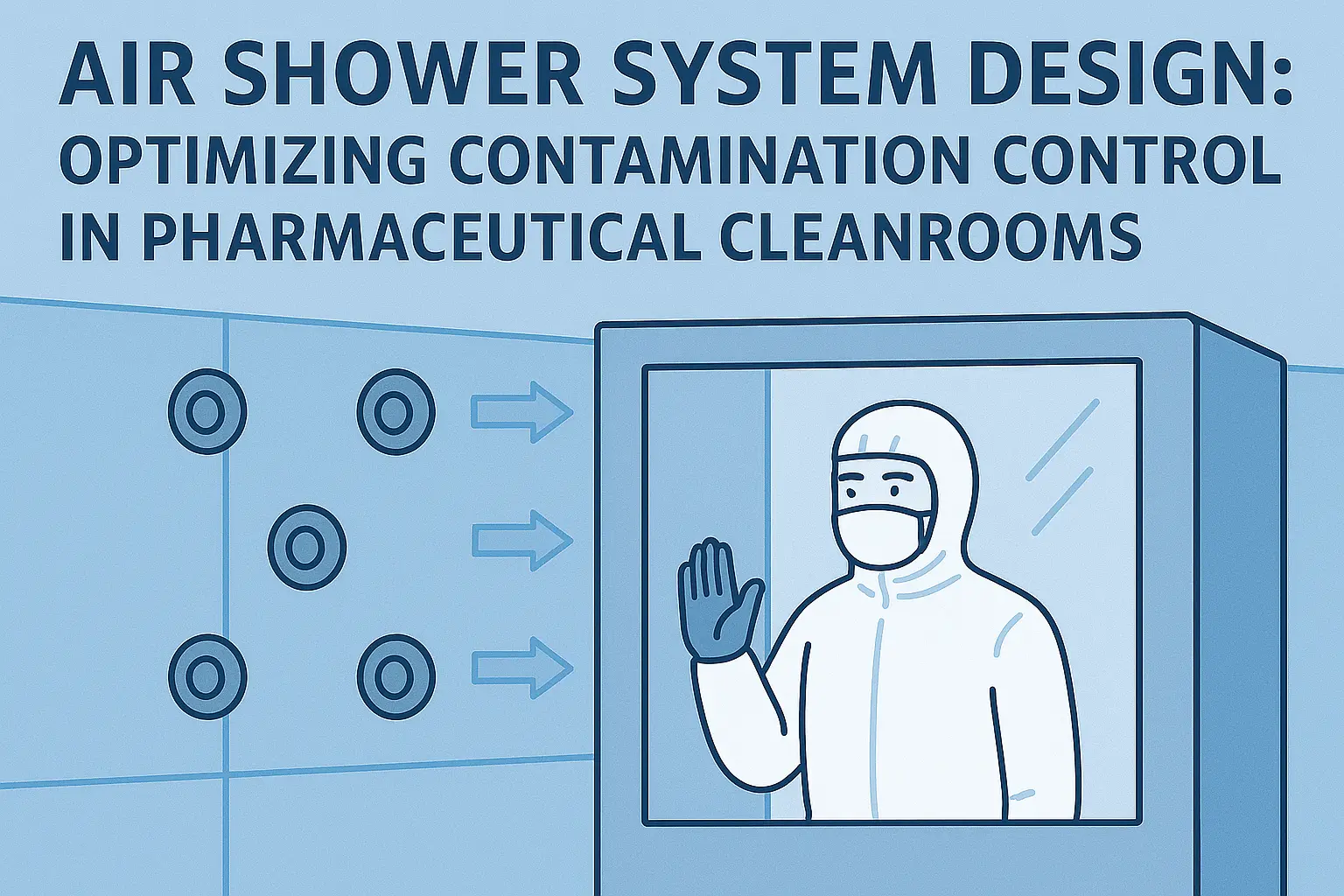
Air Shower System Design: Optimizing Contamination Control in Pharmaceutical Cleanrooms
Air shower systems form a critical component in the contamination control strategy of pharmaceutical cleanrooms, serving as the final particulate reduction step before personnel enter controlled environments. Effective air shower design requires a comprehensive understanding of operational requirements, contamination control principles, and human factors to ensure optimal performance in pharmaceutical applications.
Fundamental Design Requirements
The core function of an air shower is to dislodge and remove particulate contamination from cleanroom garments through high-velocity HEPA-filtered air jets. To achieve this effectively, several fundamental design aspects must be considered:
1. Air System Design Parameters
- •Air Velocity: Typically 18-25 meters per second (m/s) to effectively dislodge particles
- •Nozzle Configuration: Strategic placement to ensure complete coverage of personnel
- •Air Volume: Sufficient air changes within the chamber during operation
- •Filtration System: Appropriate HEPA filtration for recirculated air
2. Structural Considerations
- •Chamber Dimensions: Sized appropriately for the number of users and garment types
- •Material Selection: Non-shedding, cleanable materials compatible with cleaning agents
- •Door Systems: Reliable interlocking mechanisms with clear status indicators
- •Pressure Differentials: Maintained appropriately relative to adjacent spaces
Advanced Design Considerations
Airflow Patterns
Computational fluid dynamics (CFD) modeling can optimize nozzle placement and air return configurations to ensure thorough particle removal while minimizing turbulence that might redeposit particles on garments.
Cycle Time Optimization
Balancing the air shower operating time between effective cleaning (typically 15-30 seconds) and throughput requirements to prevent personnel bottlenecks during shift changes.
Energy Efficiency
Implementing variable frequency drives, optimized motor sizing, and intelligent control systems to reduce energy consumption while maintaining cleaning effectiveness.
Specialized Design Variants
Beyond standard configurations, specialized air shower designs address specific pharmaceutical requirements:
- •High-Capacity Systems: Tunnel designs that accommodate multiple personnel simultaneously, enhancing throughput during shift changes while maintaining effective cleaning.
- •Low-Profile Configurations: Space-optimized designs for facilities with height limitations, utilizing strategic nozzle placement to compensate for reduced chamber dimensions.
- •Enhanced Contamination Control: Systems incorporating additional technologies such as ionic air purification or UV-C sanitization to further reduce microbial contamination.
- •Integrated Gowning Systems: Comprehensive designs that combine air shower functionality with adjacent gowning rooms and hand hygiene stations for streamlined entry sequences.
Human Factors and Ergonomics
Successful air shower implementation requires careful attention to human factors:
- •User Comfort: Managing noise levels and air pressure sensations to ensure compliance with protocols
- •Accessibility Considerations: Accommodating personnel with varying mobility requirements
- •Intuitive Controls: Providing clear status indicators and simple operation instructions
- •Training Requirements: Developing comprehensive but straightforward procedures for consistent usage
Control System Design
- •Automation Level: From basic timers to sophisticated programmable logic controllers
- •Monitoring Capabilities: Pressure differentials, door status, and cycle completion verification
- •Alarm Functions: Indicating interlocking failures or improper usage patterns
- •Integration: Connection with building management systems for centralized monitoring
Implementation and Validation
Beyond design considerations, successful air shower implementation requires:
- •Performance Testing: Verifying air velocity, filtration efficiency, and particle removal effectiveness through quantitative testing methods.
- •Positioning in Gowning Sequence: Strategically placing the air shower within the overall cleanroom entry protocol to maximize effectiveness.
- •Standard Operating Procedures: Developing clear instructions for proper usage, including appropriate body positioning and rotation during operation.
- •Maintenance Protocols: Establishing regular inspection and servicing schedules to maintain optimal performance.
Conclusion
Effective air shower design requires a balanced approach that considers technical performance, operational requirements, and human factors. By carefully optimizing air delivery systems, chamber configuration, and control mechanisms, pharmaceutical facilities can implement air shower systems that provide effective particulate removal while supporting efficient personnel flow.
Terracos specializes in designing customized air shower systems for pharmaceutical applications, combining advanced engineering principles with practical operational considerations. Our comprehensive design approach ensures that each air shower solution meets the specific requirements of your facility while providing reliable contamination control performance. Contact our engineering team to discuss your specific air shower design needs.