
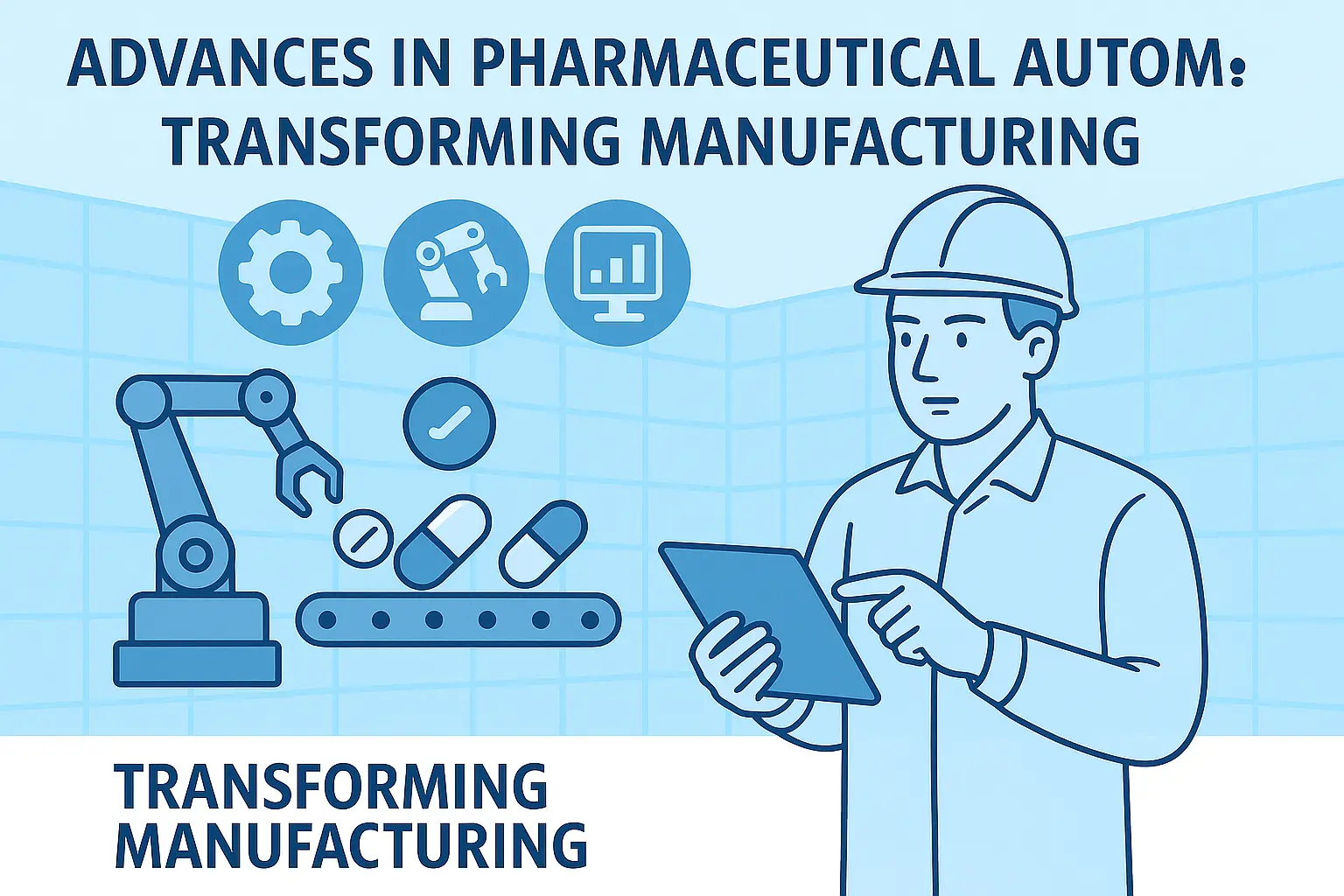
Advances in Pharmaceutical Automation: Transforming Manufacturing
The pharmaceutical manufacturing industry is experiencing a technological revolution with advanced automation systems transforming production processes. These innovations are improving efficiency, reducing human error, and enabling unprecedented levels of precision in drug production.
Key Automation Technologies in Pharmaceutical Manufacturing
1. Robotics Integration
Robotic systems are now performing tasks ranging from material handling to precise dispensing operations. Modern pharmaceutical robots can:
- •Manage sterile environments with minimal contamination risk
- •Execute high-precision tasks with consistency unattainable by human operators
- •Work continuously without fatigue, increasing production throughput
- •Operate in hazardous environments, protecting human workers
2. Advanced Process Control Systems
Modern control systems leverage artificial intelligence and machine learning to:
- •Predict and prevent process deviations before they occur
- •Automatically adjust parameters to maintain optimal conditions
- •Reduce batch-to-batch variability
- •Enable real-time quality monitoring and control
Benefits of Pharmaceutical Automation
Improved Compliance
Automated systems create detailed electronic records of all processes, simplifying regulatory compliance and enabling complete traceability of all manufacturing operations.
Enhanced Quality Control
Continuous monitoring and automated inspection systems can detect defects and deviations that might be missed by human inspectors, ensuring higher product quality.
Cost Efficiency
While initial investment is significant, automated systems reduce long-term operational costs through increased efficiency, reduced waste, and lower labor requirements.
Implementation Challenges and Solutions
- •Initial Investment: Partnering with experienced automation providers can help develop phased implementation plans that spread costs while delivering incremental benefits.
- •Validation Requirements: Building validation considerations into automation systems from the design phase can streamline qualification processes.
- •Staff Training: Comprehensive training programs and user-friendly interfaces help staff transition to automated systems effectively.
Conclusion
Pharmaceutical automation is transforming manufacturing operations, offering unprecedented levels of precision, efficiency, and compliance. By strategically implementing automation technologies, manufacturers can gain competitive advantages while ensuring consistent product quality.
Terracos specializes in designing and implementing cutting-edge automation solutions for pharmaceutical manufacturers. Contact us to discover how automation can transform your manufacturing operations.